
John Calvin Coolidge Jr. was born the son of a village storekeeper in Plymouth Notch, Vermont, on July 4, 1872. Upon graduating from college, he dropped his first name.
Coolidge`s mother, Victoria, died when he was 12 years old. The next year, he entered Black River Academy and graduated in 1890. Following a short stint at St. Johnsbury Academy, he entered Amherst College in 1891 and graduated cum laude in 1895.
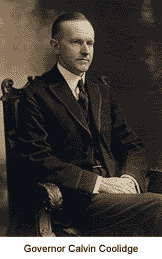 Calvin Coolidge established a law practice in Northhampton, Massachusetts, but soon developed an interest in politics. A conservative Republican, he moved steadily through the political ranks, from Northampton City Councilman (1899), City Solicitor (1900-01), Clerk of Courts (1904), Member of Massachusetts Legislature (1907-08), Mayor of Northampton (1910-11), Member of Massachusetts Legislature (1912-15),
Lieutenant-Governor of Massachusetts (1916-18) to
Governor of Massachusetts (1918-20).
He married Grace Anna Goodhue in 1905. Her personality was the opposite of Coolidge`s; she was outgoing and talkative. Her husband would later be known as "Silent Cal." The couple had two sons, John and Calvin Jr.
Calvin Coolidge became famous nationwide during the Boston Police Strike of 1919, when nearly three fourths of that force left work. Mobs roamed Boston, breaking windows and looting stores for two nights. The mayor managed to restore order with local militias. Then Coolidge called in the entire state militia, which broke the strikers` will. Coolidge made a famous declaration: "There is no right to strike against the public safety by anybody, anywhere, any time."
Coolidge won reelection for governor by a record vote. In 1920, he garnered some votes for the presidential nomination at the Republican National Convention. The delegates chose Senator Warren G. Harding of Ohio, but gave Coolidge the vice-presidential nod on the first ballot. Harding and Coolidge won a big victory over their Democratic opponents, Governor James M. Cox of Ohio and Assistant Secretary of the Navy Franklin D. Roosevelt.
Coolidge was a stolid Yankee conservative, given to utterances that left no nuanced gray areas. Speaking less than three months before he would be thrust into the presidency, Coolidge declared:
Calvin Coolidge established a law practice in Northhampton, Massachusetts, but soon developed an interest in politics. A conservative Republican, he moved steadily through the political ranks, from Northampton City Councilman (1899), City Solicitor (1900-01), Clerk of Courts (1904), Member of Massachusetts Legislature (1907-08), Mayor of Northampton (1910-11), Member of Massachusetts Legislature (1912-15),
Lieutenant-Governor of Massachusetts (1916-18) to
Governor of Massachusetts (1918-20).
He married Grace Anna Goodhue in 1905. Her personality was the opposite of Coolidge`s; she was outgoing and talkative. Her husband would later be known as "Silent Cal." The couple had two sons, John and Calvin Jr.
Calvin Coolidge became famous nationwide during the Boston Police Strike of 1919, when nearly three fourths of that force left work. Mobs roamed Boston, breaking windows and looting stores for two nights. The mayor managed to restore order with local militias. Then Coolidge called in the entire state militia, which broke the strikers` will. Coolidge made a famous declaration: "There is no right to strike against the public safety by anybody, anywhere, any time."
Coolidge won reelection for governor by a record vote. In 1920, he garnered some votes for the presidential nomination at the Republican National Convention. The delegates chose Senator Warren G. Harding of Ohio, but gave Coolidge the vice-presidential nod on the first ballot. Harding and Coolidge won a big victory over their Democratic opponents, Governor James M. Cox of Ohio and Assistant Secretary of the Navy Franklin D. Roosevelt.
Coolidge was a stolid Yankee conservative, given to utterances that left no nuanced gray areas. Speaking less than three months before he would be thrust into the presidency, Coolidge declared:
It is no wonder that the people are attached to America when we consider what it has done and what it represents. It has been called the last great hope of the world. Its simple story is a romance of surpassing interest. Its accomplishments rise above the realm of fable. To live under the privileges of its citizenship is the highest position of opportunity and achievement ever reached by a people.As Harding`s vice president, Calvin Coolidge did little, except to attend Cabinet meetings at the president`s invitation. His fortunes would change. Harding died of a heart attack on August 2, 1923. At 2:30 a.m. on August 3, while visiting family in Vermont, Calvin Coolidge received word that he was president. By the light of a kerosene lamp, his father, who was a notary public, administered the oath of office as Coolidge rested his hand on the family Bible.
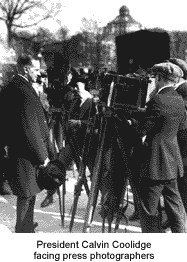 Coolidge acted swiftly to neutralize the effects of scandals that had cropped up in the Harding administration, assume control of the party machinery, and take hold of the 1924 Republican presidential nomination.
Shortly following his nomination, tragedy struck the Coolidge family. Their son, Calvin, blistered a toe while playing tennis and it became infected. The 16-year-old later died of blood poisoning.
In November 1924, Calvin Coolidge was easily elected over Democrat John W. Davis, and Progressive Robert M. La Follette, receiving 54 percent of the popular vote.
In domestic affairs, Coolidge advocated more cuts in federal taxation and spending, maintaining a high protective tariff, and realigning regulatory policy to favor business. He also blocked the McNary-Haugen scheme that called, in part, for a federal farm board to purchase surplus farm production at pre-World War I prices.
In foreign affairs, he was guided by his secretaries of state, Charles Evans Hughes and Frank B. Kellogg, to continue to search for improved international relations through organizations and means outside the League of Nations. Among his administration`s diplomatic accomplishments were the Dawes Plan for restructuring German reparations, the Stimson accords for pacifying Nicarauga, and the Kellogg-Briand Pact for outlawing war.
On August 2, 1927, Coolidge announced in a typically brief written statement that he would not seek reelection in 1928. He retired and the couple returned to Northampton. Coolidge published The Autobiography of Calvin Coolidge in 1929. The following year, he launched a series of daily news articles entitled, "Thinking Things Over with Calvin Coolidge."
The stock market crash and the deepening depression distressed Coolidge, who believed he might have done more to prevent it. Later, however, he averred that the depression would have happened regardless of the party in power.
On January 5, 1933, Grace Coolidge found her husband lying on the floor of his bedroom, where he had expired of a heart attack. He was 61.
Calvin Coolidge was a popular president and respected for his integrity. His advocacy of tax cuts, economical government, and his strong laissez faire policy toward business fit well in an era of general prosperity, and gave the laconic New Englander popular backing. Circumspect in domestic matters and practically an isolationist with regard to Europe, Coolidge personified the Republican philosophy of conservatism endorsed by a large majority of Americans during the 1920s.
Coolidge was so well known for his brief manner of speech that several of his statements have become standard quotations. His often quoted for saying, in declining a 1928 Republican nomination, "I do not choose to run." In a 1924 biography of Coolidge, author Robert Morris Washburn quotes Coolidge as saying, "I have never been hurt by what I haven`t said."
Coolidge was the object of a number of comments which have become famous quotes. About him, Walter Lippmann wrote, "Mr. Coolidge`s genius for inactivity is developed to a very high point. It is far from being an indolent inactivity. It is a grim, determined, alert inactivity which keeps Mr. Coolidge constantly occupied." Dorothy Parker is quoted as saying, when she learned that Coolidge had died, "How could they tell?"
Coolidge acted swiftly to neutralize the effects of scandals that had cropped up in the Harding administration, assume control of the party machinery, and take hold of the 1924 Republican presidential nomination.
Shortly following his nomination, tragedy struck the Coolidge family. Their son, Calvin, blistered a toe while playing tennis and it became infected. The 16-year-old later died of blood poisoning.
In November 1924, Calvin Coolidge was easily elected over Democrat John W. Davis, and Progressive Robert M. La Follette, receiving 54 percent of the popular vote.
In domestic affairs, Coolidge advocated more cuts in federal taxation and spending, maintaining a high protective tariff, and realigning regulatory policy to favor business. He also blocked the McNary-Haugen scheme that called, in part, for a federal farm board to purchase surplus farm production at pre-World War I prices.
In foreign affairs, he was guided by his secretaries of state, Charles Evans Hughes and Frank B. Kellogg, to continue to search for improved international relations through organizations and means outside the League of Nations. Among his administration`s diplomatic accomplishments were the Dawes Plan for restructuring German reparations, the Stimson accords for pacifying Nicarauga, and the Kellogg-Briand Pact for outlawing war.
On August 2, 1927, Coolidge announced in a typically brief written statement that he would not seek reelection in 1928. He retired and the couple returned to Northampton. Coolidge published The Autobiography of Calvin Coolidge in 1929. The following year, he launched a series of daily news articles entitled, "Thinking Things Over with Calvin Coolidge."
The stock market crash and the deepening depression distressed Coolidge, who believed he might have done more to prevent it. Later, however, he averred that the depression would have happened regardless of the party in power.
On January 5, 1933, Grace Coolidge found her husband lying on the floor of his bedroom, where he had expired of a heart attack. He was 61.
Calvin Coolidge was a popular president and respected for his integrity. His advocacy of tax cuts, economical government, and his strong laissez faire policy toward business fit well in an era of general prosperity, and gave the laconic New Englander popular backing. Circumspect in domestic matters and practically an isolationist with regard to Europe, Coolidge personified the Republican philosophy of conservatism endorsed by a large majority of Americans during the 1920s.
Coolidge was so well known for his brief manner of speech that several of his statements have become standard quotations. His often quoted for saying, in declining a 1928 Republican nomination, "I do not choose to run." In a 1924 biography of Coolidge, author Robert Morris Washburn quotes Coolidge as saying, "I have never been hurt by what I haven`t said."
Coolidge was the object of a number of comments which have become famous quotes. About him, Walter Lippmann wrote, "Mr. Coolidge`s genius for inactivity is developed to a very high point. It is far from being an indolent inactivity. It is a grim, determined, alert inactivity which keeps Mr. Coolidge constantly occupied." Dorothy Parker is quoted as saying, when she learned that Coolidge had died, "How could they tell?"