Impeachment of Andrew Johnson
Constitutional
provisions for impeachment of a president of the United States stipulate that the House of Representatives has the sole power to impeach (to bring charges) and the Senate alone is responsible for trying those so charged. Conviction and removal from office can occur only by a two-thirds vote of the Senate and must be based upon the commission of treason, bribery, or high crimes and misdemeanors.
The
Radical Republicans organized an effort in Congress to impeach the president as a payback for resisting their programs. Since even his sternest critics could not produce evidence of treason or bribery, the Radicals assembled an array of high crimes and misdemeanors, which included:
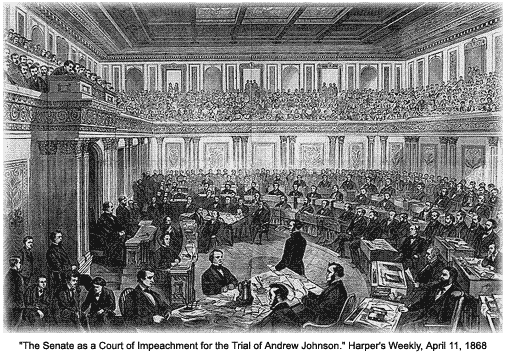
Becoming the first president in American history to be impeached, Johnson’s attorneys opened his defense in the Senate at the end of March 1868. Chief Justice
Salmon P. Chase presided.
Charles Sumner of
Massachusetts led the forces seeking conviction. Thaddeus Stevens of
Pennsylvania, gravely ill and long a critic of Johnson, insisted on being carried on a chair into the Senate chamber so that he could participate in the debate.
The prosecution case was not a strong one. The basic thrust centered on the Tenure of Office Act and the firing of Edward Stanton, who was appointed by
Lincoln and not by Johnson. The charges were clearly political and no real evidence of high crimes and misdemeanor was introduced.
The Republicans, if they held together, had enough votes to convict Johnson and force him from office. However, some of the Senators quietly questioned the wisdom of removing the president who had only a year remaining on his term. Further, his replacement would have been Benjamin F. Wade of
Ohio, an extreme radical who supported workers’ rights and
woman suffrage — highly contentious issues in that day.
The vote in the Senate was 35-19 for conviction, one vote short of the necessary two-thirds. A handful of Republicans had crossed over and voted with the Democrats, thus denying the ultimate revenge to the Radicals.
In retrospect, it was probably fortunate that conviction was averted. The removal of Johnson might have permanently weakened the executive branch.
