Nonimportation Agreements
Beginning with the unpopular Grenville reforms of the mid-1760s and continuing for a decade, the nonimportation agreement or boycott was the chief American means to gain the attention of faraway British policymakers.
Colonial critics of revenue-raising tax measures realized that they had little clout in Parliament. In order to receive a meaningful hearing in London, the Americans needed support from an influential lobbying force; English merchants and manufacturers fit the bill. Many of those businessmen had strong trade ties with the colonies as well as strong relationships with members of Parliament.
If trade were to decline sharply — as the case would be during a boycott — then English business interests would be harmed financially. It was hoped they would then prevail upon the government for a change in policy.
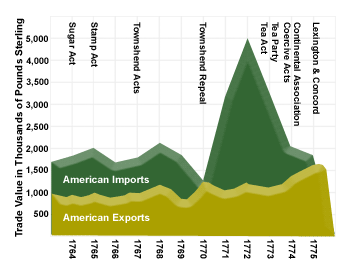
This form of economic retaliation was used in response to the
Sugar Act (1764), but enjoyed its greatest success during the
Stamp Act Crisis (1765) and the upheaval following the
Townsend Acts (1767-1770). A period of relative calm prevailed in the early 1770s, but came to an abrupt end with passage of the
Coercive Acts (1774). The height of the nonimportation movement was reached with the
First Continental Congress’s decision to create
The Association, a body charged with overseeing the nonimportation, non-exportation and non-consumption of all British goods.
Manufacturers in Britain were alarmed at the prospect of the colonies becoming more self-sufficient in manufacturing. General Thomas Gage reported in a letter to Lord Shelburne in 1768 on the worrisome conditions he found: "Instead of clearing uncultivated lands, which it was expected they would do, they have for the most part crowded into the towns to work at trades, and help the inhabitants with necessaries, which should be imported from the mother country."
Many American merchants were not enthusiastic boycott supporters. They depended on trade to make their livings and a disruption in those activities meant serious economic consequences. Reluctant merchants, however, were often brought into line by the persuasive tactics of the
Sons of Liberty and other enforcers of colonial unity.
See timeline of the
American Revolution.
