Albany Congress
British officials believed that a North American war with France was imminent and urged colonial leaders to prepare for the common defense. A meeting was held in Albany in the spring of 1754 and was attended by native leaders, colonial officials and representatives from seven of the British colonies. Discussions at the Albany Congress focused on two primary issues:
- The Iroquois. Often referred to as the Six Nations, the Iroquois had traditionally maintained stronger relationships with the French than the British, but by the 1740s the British were actively engaged in trade with many tribes in the Ohio Valley. Native leaders were not anxious to commit themselves to siding with one power or the other, preferring to wait and see if they could ally with the winning side. Nevertheless, the Albany officials were successful with winning a tepid commitment from the Iroquois in return for substantial bribes of supplies and weapons.
- The Albany Plan of Union. Benjamin Franklin and Massachusetts governor Thomas Hutchinson drafted a proposal for colonial unity in the face of the coming war with France.
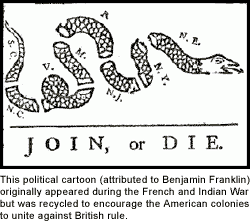 The plan called for the creation of new layers of government, including a president-general who would be appointed by the Crown and exercise broad powers over relationships with the natives, making war and governing the frontier areas until new colonies were created. A grand council was also proposed whose members would be appointed by the existing colonial assemblies and whose representation would be determined by the amount of financial contribution (taxes) paid to the organization.
The plan for a federated colonial government never got off the ground. It was approved by the delegates at the Albany Congress, but not a single colonial assembly ratified it. It was doubtful, even if approved by the assemblies, that royal officials would have approved of this consolidation of power in America.
Instead, the Board of Trade in London proposed the creation of a colonial council composed of one representative from each colony. That body would be responsible for raising militia forces and apportioning the cost among the membership. This idea elicited little enthusiasm in America, where the colonists preferred to have British regulars fight their battles with money raised on the other side of the Atlantic.
The Albany Plan of Union set an example that would later be followed by such gatherings as the
continental congresses.
See
French and Indian War Timeline.
See also
Indian Wars Time Table.
