Webster-Ashburton Treaty
The Treaty of Paris (1783) at the end of the War for Independence had only vaguely defined the northeastern boundary of the United States. As the population grew in northern Maine, friction developed between rival groups of lumberjacks (see Aroostook War). An effort to resolve the situation had been made in 1831 when the King of the Netherlands sponsored negotiations, but his endeavor was rejected by the Senate.
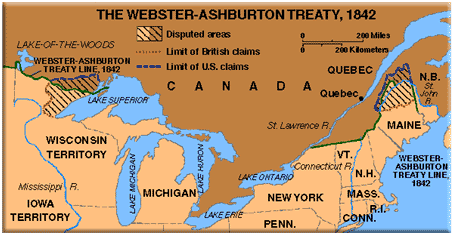
In 1842, Secretary of State
Daniel Webster met with the British Foreign Minister, Alexander Baring, the first Baron Ashburton. The resulting Webster-Ashburton Treaty reached agreement on the following points:
- Boundaries: Clearly defined borders were drawn between Maine and New Brunswick, and also in the Great Lakes area; the United States received control of 7,015 square miles of the disputed territory and Britain, 5,012 square miles
- Extradition: Some movement was made toward addressing extradition (the legal process for returning fugitives to another jurisdiction) concerns between the two nations; this matter had become politically sensitive following the Caroline affair; a formal extradition treaty was concluded later
- African slave trade: The United states agreed to station ships off the African coast in an effort to detect Americans engaging in the slave trade; Webster rejected a request to allow boarding of American ships by the British Navy.
One question of growing concern, the Oregon boundary issue, was not addressed in this agreement.
The Webster-Ashburton Treaty was significant in that it furthered the practice of settling troublesome issues through diplomacy.
