
Uncle Tom’s Cabin, which appeared originally in magazine form, then as a book and later stage through play presentations, constituted one of the most influential literary efforts on American history, despite having little merit as a work of literature.
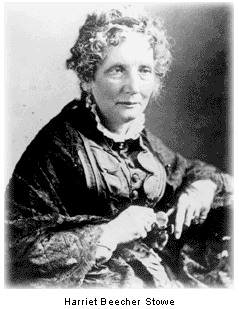 The author, Harriet Beecher Stowe, was the daughter of a prominent Congregational clergyman, the Reverend Lyman Beecher, and the sister of Henry Ward Beecher. In 1832 the family moved from New England to Cincinnati, the home of Lane Theological Seminary, which was known as a hotbed of abolitionist thinking. There Harriet married Calvin E. Stowe, a member of the faculty, and also gained some knowledge of slavery as it existed across the Ohio River in neighboring Kentucky.
In 1850 Stowe and her husband moved to Maine where she began work on what became Uncle Tom’s Cabin. Published first in 1851-52 as installments in National Era, an abolitionist magazine, the story came out in book form in 1852. It was an immediate success, selling more than 300,000 copies in its first year. Later it was translated into more than 20 languages and sold an astounding 1.5 million copies.
The principal characters of the book are Tom and Eliza, slaves of Arthur Shelby, a Kentucky man who is forced to sell some of his slaves due to debts. Eliza escapes across the ice of the Ohio River and reaches the Underground Railroad. Tom encounters various experiences, including saving the life of Eva, the little daughter of Augustine St. Clare. The latter buys Tom and makes him a household servant, but after St. Clare's death, he is sold again, this time to Simon Legree, the brutal overseer of a Red River plantation. Young George Shelby arrives too late to save his favorite old servant.
Harriet Stowe's actual knowledge of slavery was very limited, derived from her time in Cincinnati across the river from Kentucky, where some actual slaves lived. Although she claimed in her 1853 book, A Key to Uncle Tom's Cabin, that every major episode could be documented, there is no evidence of this.
Uncle Tom’s Cabin was reviled in the South as abolitionist propaganda, but sales in that region were very strong.
Abraham Lincoln is reported to have said when he met Stowe, “So you’re the little woman who wrote the book that made this great war.” Uncle Tom’s Cabin was by no measure a literary masterpiece. It was highly romantic and stereotypical, but it served to personalize slavery and its horrors for many readers throughout the world.
On the flip side, the extreme sentimentality created a backlash and the term "Uncle Tom" eventually came to define a black who strives too hard to please the white population.
The author, Harriet Beecher Stowe, was the daughter of a prominent Congregational clergyman, the Reverend Lyman Beecher, and the sister of Henry Ward Beecher. In 1832 the family moved from New England to Cincinnati, the home of Lane Theological Seminary, which was known as a hotbed of abolitionist thinking. There Harriet married Calvin E. Stowe, a member of the faculty, and also gained some knowledge of slavery as it existed across the Ohio River in neighboring Kentucky.
In 1850 Stowe and her husband moved to Maine where she began work on what became Uncle Tom’s Cabin. Published first in 1851-52 as installments in National Era, an abolitionist magazine, the story came out in book form in 1852. It was an immediate success, selling more than 300,000 copies in its first year. Later it was translated into more than 20 languages and sold an astounding 1.5 million copies.
The principal characters of the book are Tom and Eliza, slaves of Arthur Shelby, a Kentucky man who is forced to sell some of his slaves due to debts. Eliza escapes across the ice of the Ohio River and reaches the Underground Railroad. Tom encounters various experiences, including saving the life of Eva, the little daughter of Augustine St. Clare. The latter buys Tom and makes him a household servant, but after St. Clare's death, he is sold again, this time to Simon Legree, the brutal overseer of a Red River plantation. Young George Shelby arrives too late to save his favorite old servant.
Harriet Stowe's actual knowledge of slavery was very limited, derived from her time in Cincinnati across the river from Kentucky, where some actual slaves lived. Although she claimed in her 1853 book, A Key to Uncle Tom's Cabin, that every major episode could be documented, there is no evidence of this.
Uncle Tom’s Cabin was reviled in the South as abolitionist propaganda, but sales in that region were very strong.
Abraham Lincoln is reported to have said when he met Stowe, “So you’re the little woman who wrote the book that made this great war.” Uncle Tom’s Cabin was by no measure a literary masterpiece. It was highly romantic and stereotypical, but it served to personalize slavery and its horrors for many readers throughout the world.
On the flip side, the extreme sentimentality created a backlash and the term "Uncle Tom" eventually came to define a black who strives too hard to please the white population.