
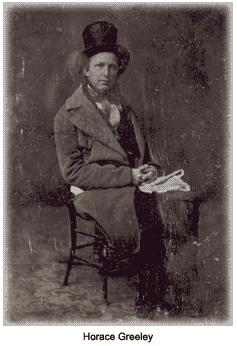
 Horace Greeley was born in Amherst, New Hampshire in the farm country west of Nashua and Manchester. His schooling was intermittent, but he was an enthusiastic reader. At age 15 he was apprenticed to a printer in Vermont and began learning a trade he would follow, in one form or another, for the remainder of his life.
In 1831 Greeley settled in New York City and quickly became involved in a number of publishing ventures, including the New Yorker (1834), which dealt with current events, the arts and literature. He became, for a while, an ally of Thurlow Weed and William H. Seward, joining them in championing a number of political reforms.
The New York Tribune, one of the earliest “penny dailies” popular in the era, was established in 1841. Greeley also would publish a weekly nationwide edition of the Tribune, which won him and his views wide recognition. The Tribune set a higher tone than its competitors by avoiding sensationalism and offering regular features such as book reviews.
Greeley and the Tribune spoke out in opposition to such things as government support of the railroads, the massive accumulation of wealth in the hands of a few, monopolies and land speculators. He offered support for traditional Whig principles, including high protective tariffs, federally sponsored internal improvements, and the Bank of the United States. He was not an ardent expansionist, but enthusiastically supported an orderly westward movement. He did not, however, coin the phrase, “Go West, young man,” as is frequently reported.
Greeley cultivated a life-long concern for the working man. He improved conditions at the Tribune, supported organization of the work force and provided a profit-sharing plan. Greeley flirted with utopianism, lending his support to a cooperative community that would bear his name: Greeley, Colorado. He also briefly employed Karl Marx as a foreign correspondent.
Greeley supported the temperance movement and women’s rights.
In the years before the Civil War, Greeley opposed slavery, but also opposed abolitionist tactics. He wrote in opposition to the Mexican War, believing that it would benefit the slaveowners only. Appointed to fill a Congressional vacancy in 1848, Greeley served for three months; he quickly wore out his welcome by reporting on some of the less-than-dignified behavior he encountered in Washington. Some of his most forceful editorials were directed against the 1854 Kansas-Nebraska Act, a stance that terminated his cooperation with Weed and Seward.
Followed his own advice and went west in 1859 to gather information that would interest the readers of the New York Tribune. He was especially keen on learning more about the Mormons and on July 13, he had the opportunity to interview Brigham Young. Mormons impressed him with their achievements, although not with their theology.
Greeley was an early member of the Republican Party and, after initially supporting another candidate, helped to secure the nomination for Abraham Lincoln in 1860. This effort further widened Greeley’s split from Seward, who had been the nomination frontrunner. Greeley’s views on the secession crisis were the target of much criticism. He initially argued that the South should be allowed to secede. Later, however, he became a strong supporter of the war effort, but subjected Lincoln to searing criticism for refusing to free the slaves.
After the war, Greeley supported a general amnesty for Confederate officials and angered many Northerners by signing a bail bond for Jefferson Davis; subscriptions to the Tribune fell by half.
In 1872 Greeley received the presidential nomination of both the Liberal Republican and Democratic parties, but his candidacy was doomed from the start. Exhausted by the campaign and distraught with his wife's death, Greeley died a few weeks after the election.
Horace Greeley was one of the most interesting and eccentric figures in American history. At one time or another he was involved in almost every political and social issue of his era, ranging from election reform to spiritualism and phrenology. Even in appearance Greeley sparked comment; his round face was ringed by white whiskers, he wore a full length coat on even the hottest days and always carried a bright umbrella.
Horace Greeley was born in Amherst, New Hampshire in the farm country west of Nashua and Manchester. His schooling was intermittent, but he was an enthusiastic reader. At age 15 he was apprenticed to a printer in Vermont and began learning a trade he would follow, in one form or another, for the remainder of his life.
In 1831 Greeley settled in New York City and quickly became involved in a number of publishing ventures, including the New Yorker (1834), which dealt with current events, the arts and literature. He became, for a while, an ally of Thurlow Weed and William H. Seward, joining them in championing a number of political reforms.
The New York Tribune, one of the earliest “penny dailies” popular in the era, was established in 1841. Greeley also would publish a weekly nationwide edition of the Tribune, which won him and his views wide recognition. The Tribune set a higher tone than its competitors by avoiding sensationalism and offering regular features such as book reviews.
Greeley and the Tribune spoke out in opposition to such things as government support of the railroads, the massive accumulation of wealth in the hands of a few, monopolies and land speculators. He offered support for traditional Whig principles, including high protective tariffs, federally sponsored internal improvements, and the Bank of the United States. He was not an ardent expansionist, but enthusiastically supported an orderly westward movement. He did not, however, coin the phrase, “Go West, young man,” as is frequently reported.
Greeley cultivated a life-long concern for the working man. He improved conditions at the Tribune, supported organization of the work force and provided a profit-sharing plan. Greeley flirted with utopianism, lending his support to a cooperative community that would bear his name: Greeley, Colorado. He also briefly employed Karl Marx as a foreign correspondent.
Greeley supported the temperance movement and women’s rights.
In the years before the Civil War, Greeley opposed slavery, but also opposed abolitionist tactics. He wrote in opposition to the Mexican War, believing that it would benefit the slaveowners only. Appointed to fill a Congressional vacancy in 1848, Greeley served for three months; he quickly wore out his welcome by reporting on some of the less-than-dignified behavior he encountered in Washington. Some of his most forceful editorials were directed against the 1854 Kansas-Nebraska Act, a stance that terminated his cooperation with Weed and Seward.
Followed his own advice and went west in 1859 to gather information that would interest the readers of the New York Tribune. He was especially keen on learning more about the Mormons and on July 13, he had the opportunity to interview Brigham Young. Mormons impressed him with their achievements, although not with their theology.
Greeley was an early member of the Republican Party and, after initially supporting another candidate, helped to secure the nomination for Abraham Lincoln in 1860. This effort further widened Greeley’s split from Seward, who had been the nomination frontrunner. Greeley’s views on the secession crisis were the target of much criticism. He initially argued that the South should be allowed to secede. Later, however, he became a strong supporter of the war effort, but subjected Lincoln to searing criticism for refusing to free the slaves.
After the war, Greeley supported a general amnesty for Confederate officials and angered many Northerners by signing a bail bond for Jefferson Davis; subscriptions to the Tribune fell by half.
In 1872 Greeley received the presidential nomination of both the Liberal Republican and Democratic parties, but his candidacy was doomed from the start. Exhausted by the campaign and distraught with his wife's death, Greeley died a few weeks after the election.
Horace Greeley was one of the most interesting and eccentric figures in American history. At one time or another he was involved in almost every political and social issue of his era, ranging from election reform to spiritualism and phrenology. Even in appearance Greeley sparked comment; his round face was ringed by white whiskers, he wore a full length coat on even the hottest days and always carried a bright umbrella.