
On January 24, 1848, James Marshall, a mechanic working for mill owner John Sutter, discovered gold on the south fork of the American River in the Coloma Valley of California, northeast of Sacramento. Word of this discovery appeared in Eastern newspapers in the fall of 1848 and was further popularized in remarks made by James K. Polk in his farewell address.
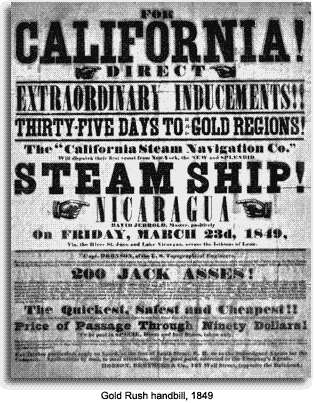 Soon, passenger-laden ships sailed from the East Coast, around Cape Horn, and northward to California. Within the first year, more than 80,000 prospectors, the Forty-Niners, arrived. San Francisco grew to a community of 20,000 in a few months. In 1848, the population of California was about 15,000. By 1852, California’s population topped 250,000. The ranks of new residents were swollen by sailors who jumped ship in San Francisco and headed to the gold fields, leaving their ships too short on crew to continue.
California attracted many reputable people, but the first to go were the ones with the least to lose and the fewest responsibilities. The predictable result was a rise in crime. In San Francisco, a gang of immigrants from Australia known as the Sydney Ducks was particularly notorious, and led to the establishment of the San Francisco Committee of Vigilance in 1851. The Vigilantes hanged several men and forced a number of corrupt officials to resign. It was reestablished in 1856. In both cases, the committees dissolved themselves after a few months.
The discovery of gold transformed California from a sparsely populated, distant region into an area ripe for statehood. The issue of admitting California as a free state — this was not cotton country — was one of the prime issues to be addressed in the Compromise of 1850.