Calvinism
The Protestant Reformation made its initial impact in 16th century Europe through the efforts of Martin Luther and his followers. The teachings of another reformer, French-born theologian and lawyer John Calvin (1509-1564), came to prominence somewhat later and supplanted Lutheranism in many areas.
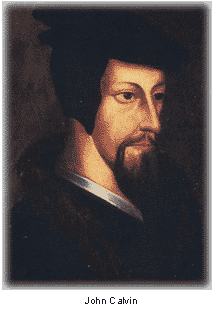 Calvin’s theology was presented in the Institutes of the Christian Religion, published in 1536 and revised a number of times thereafter. Basic tenets included the following beliefs:
- God is totally and completely sovereign
- All men are totally depraved and deserve eternal damnation. In the beginning, man was created in God’s image, but he destroyed the special relationship with the Creator by tasting the forbidden fruit (Adam’s fall). God’s response was harsh, but just — Adam and Eve and all of their descendants forever were condemned and would bear the mark of original sin.
- A merciful God, however, took pity on man and sent his Son to redeem some of the damned. No man was deserving of such grace, but God freely offered salvation to an unspecified number (thought to be very small) of sinners. These fortunate individuals were known as the Elect; their fate was determined by God before their births (predestination) and was irreversible.
No one knew who was among the saved. It was commonly accepted by many Calvinists that saintly behavior was a sign that a person was a member of the elect, but doctrine taught that good conduct could not “win” salvation for anyone. God had decided that matter long ago. On the other side of the coin, it was almost universally believed among Calvinists that a life of dissipation was a sure sign of damnation.
Such a system of beliefs exerted a mixed impact on society. Good conduct was encouraged because many people, perhaps unconsciously, wanted to convince themselves that they were among the elect. However, there were negative influences from Calvinism as well. Anxiety was high in these communities as anguished believers contemplated their fates. There also was a rather constant and unpleasant interest in one’s neighbors’ activities. Comfort was found by observing the moral failures of others and concluding that they were no doubt among the damned.
Calvinists differed from Roman Catholics in their rejection of papal authority. Calvin came to embrace the idea of a “universal priesthood” in which believers did not need the daily ministration of priests. Calvin retained only two of the Catholic sacraments: Communion and Baptism.
The Calvinists shared with the Lutherans a dependency on Scripture to discern God’s word, but the nature of that word was the subject of great dispute. Luther had taught that salvation was based on faith and rejected the Calvinistic conception of predestination. The Calvinists insisted on an austere society governed by theocrats (as Calvin helped to establish in Geneva); Lutheran communities were more accepting and forgiving. Both the Calvinists and Lutherans would be at odds with later, more emotionally charged Christian sects, in which each group (and sometimes each individual) would interpret Scripture.
Calvinism would have a great impact on the development of colonial America, especially in the New England region, where the so-called Reformed churches (
Puritan, Presbyterian and
Huguenot) were dominant in the early years.
