
Confederate strength in Kentucky and western Tennessee was centered at two fortified positions, one on the Tennessee River (Fort Henry) and the other 20 miles away on the Cumberland River (Fort Donelson). These positions were important for regulating access to the Mississippi River from the east.
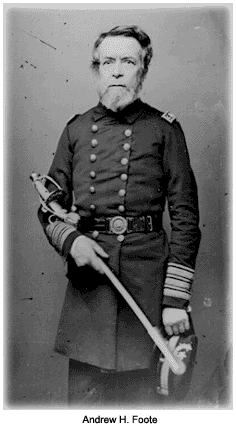 General Henry W. Halleck was the commander of the army in Missouri and Kentucky, both Border States contested bitterly by the two sides. In February 1862 one of Halleck’s subordinates, Ulysses S. Grant, was delayed in reaching Fort Henry, leaving Commodore Andrew Foote to carry out the attack from a flotilla of gunboats. Most of the Confederate soldiers escaped to nearby Fort Donelson, but Fort Henry was delivered into Union hands.
Ten days later, Grant forced the unconditional surrender of Fort Donelson and its 15,000 Confederate soldiers. The initials U.S. in Grant’s name came to mean “unconditional surrender” in the minds of grateful Northerners. The general became a national hero and caught the attention of President Lincoln.
The capture of Forts Henry and Donelson offered good news to a Northern public, which was receiving largely bad news from the eastern front. Two major Confederate impediments were now removed, opening the Cumberland and Tennessee rivers. Access to these rivers meant access to the Ohio, which in turn flowed on to the Mississippi.
General Henry W. Halleck was the commander of the army in Missouri and Kentucky, both Border States contested bitterly by the two sides. In February 1862 one of Halleck’s subordinates, Ulysses S. Grant, was delayed in reaching Fort Henry, leaving Commodore Andrew Foote to carry out the attack from a flotilla of gunboats. Most of the Confederate soldiers escaped to nearby Fort Donelson, but Fort Henry was delivered into Union hands.
Ten days later, Grant forced the unconditional surrender of Fort Donelson and its 15,000 Confederate soldiers. The initials U.S. in Grant’s name came to mean “unconditional surrender” in the minds of grateful Northerners. The general became a national hero and caught the attention of President Lincoln.
The capture of Forts Henry and Donelson offered good news to a Northern public, which was receiving largely bad news from the eastern front. Two major Confederate impediments were now removed, opening the Cumberland and Tennessee rivers. Access to these rivers meant access to the Ohio, which in turn flowed on to the Mississippi.