
A few weeks following the outbreak of the Civil War, Britain formally proclaimed her neutrality. As a neutral nation, belligerent ships were not to be constructed or outfitted in British ports. Nevertheless, private Confederate supporters arranged for the building of a number of ships, including the Shenandoah, the Florida and most infamously the Alabama.
The Alabama was constructed at a shipyard in Birkenhead, close to Liverpool, initial known as just Hull 290. There were no cannons so as not to cause immediate action by the British government, but the interior was being built to Admiralty standards, as was soon determined by Union spies. Hull 290 was launched on May 15, 1862, named Erica and immediately taken to another site for further work, still nominally non-military. On June 15, she made her first trial run.
Despite the ruse, United States minister, Charles Francis Adams, presented convincing evidence on June 23 that the ship had hostile intentions and demanded that it be prevented from sailing. The British response was exceedingly slow and on July 28, just before a court order detaining it would have arrived, the ship set sail on another "trial run" in the bay, and never came back.
Flying under the Union Jack, the ship picked up 30 sailors in Anglesey and set sail for the Azores. There she switched her colors to Confederate, switched her name to Alabama, took on guns and supplies, and set out on a two-year campaign to terrorize Union shipping in the oceans of the world. During the course of seven expeditionary voyages under the leadership of Captain Raphael Semmes, the AlabamaI/i> sank or captured 66 Union ships, including the warship Hatteras.
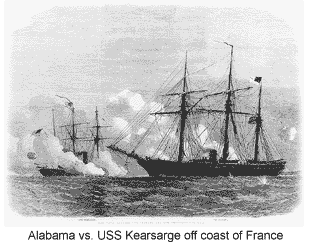 Alabama put in at Cherbourg in France for repairs on June 11, 1864. Aware of her presence, the USS Kearsarge arrived on June 14 and decided to wait for her just outside the three-mile limit. Unwilling to remain blockaded, Captain Semmes left the harbor on June 18 and engaged the Kearsarge in battle. The result was that the Kearsarge sank the Alabama but Captain Semmes and some of his crew escaped to England on a private British yacht, the Dearhound.
Two other Confederate raiders, the Florida and the Shenandoah, did lesser, although still significant, damage to Union shipping. Like the Alabama, the Florida was built in England and launched on March 22, 1862, sailing to the Bahamas where it was provisioned with guns and ammunitions. With crew and officers stricken with yellow fever, the ship sailed first to Cuba and then into Mobile harbor, running the gauntlet of the Union blockade. Returning to sea on January 16, 1863, the Florida captured 37 prizes before being taken by the USS Wachusett in Brazilian waters in 1864.
The Shenandoah was not built for the Confederacy, but had instead been the British ship Sea King until being taken over by Confederates in October, 1864, in Madeira. Sailing for Melbourne, Australia, it was there outfitted with weapons and began a campaign against Yankee whaling vessels in Arctic waters. The Sea King survived the war and surrendered to the British government in November, 1865.
Americans felt that the British had declared neutrality too quickly, thereby bestowing belligerent rights on the Confederacy. They also held the view that the British had favored the Confederacy through their negligence with respect to the Alabama and Florida particularly, and their willingness to let Confederate agents raise money in Britain.
British concern for their obligations as a neutral varied according to their perception of the likely winner. In the early going, when Union military incompetence contrasted with Confederate flair, the British came close to extending diplomatic recognition to the South. As it became clearer that the Union could bring enormous resources to bear, far beyond what the Confederacy could must, the British grew more sensitive to their duties, especially when the United States indicated that it would demand compensation for British-built Conferate raiders. In April, 1863, the British would not let the Alexandra to sail, and in October, they halted the construction of two blockade-busting rams.
American claims for damages due to the three ships amounted to over $19 million, but although they were presented, they received no reply until 1868. Although not referring to the Alabama directly, the Johnson-Clarendon Convention did provide for a settlement of all claims between Britain and the United States since 1853, but the Senate overwhelmingly defeated the treaty.
At this juncture, Charles Sumner advanced the theory that not only had the United States suffered direct damages, the illegal support given by Britain to the Confederacy had doubled the duration of the Civil War. He thus calculated that the United States should advance a claim of $2,125,000,000. The British were not amused. They did not warm to the idea when it was explained that if they didn`t want to pay cash, the United States would accept Canada.
With the coming of the Grant administration in March, 1869, the new Secretary of State Hamilton Fish took a more reasoned approach. It was in the interests of both countries to resolve the Alabama claims, in view of the tight economic relationship that existed. Fish and the new British foreign secretary, Lord Granville, decided that a joint commission should settle the Civil War claims, the northwest boundary issues, and Canadian fisheries.
The commission drew up the Treaty of Washington (1871) in which the British apologized for the escape of the Alabama, agreed to rules of maritime neutrality, and the two countries submitted the Alabama claims to arbitration.
The arbitrators awarded $15,500,000 to the United States to satisfy its direct claims for damages, and dismissed the indirect claims.
Alabama put in at Cherbourg in France for repairs on June 11, 1864. Aware of her presence, the USS Kearsarge arrived on June 14 and decided to wait for her just outside the three-mile limit. Unwilling to remain blockaded, Captain Semmes left the harbor on June 18 and engaged the Kearsarge in battle. The result was that the Kearsarge sank the Alabama but Captain Semmes and some of his crew escaped to England on a private British yacht, the Dearhound.
Two other Confederate raiders, the Florida and the Shenandoah, did lesser, although still significant, damage to Union shipping. Like the Alabama, the Florida was built in England and launched on March 22, 1862, sailing to the Bahamas where it was provisioned with guns and ammunitions. With crew and officers stricken with yellow fever, the ship sailed first to Cuba and then into Mobile harbor, running the gauntlet of the Union blockade. Returning to sea on January 16, 1863, the Florida captured 37 prizes before being taken by the USS Wachusett in Brazilian waters in 1864.
The Shenandoah was not built for the Confederacy, but had instead been the British ship Sea King until being taken over by Confederates in October, 1864, in Madeira. Sailing for Melbourne, Australia, it was there outfitted with weapons and began a campaign against Yankee whaling vessels in Arctic waters. The Sea King survived the war and surrendered to the British government in November, 1865.
Americans felt that the British had declared neutrality too quickly, thereby bestowing belligerent rights on the Confederacy. They also held the view that the British had favored the Confederacy through their negligence with respect to the Alabama and Florida particularly, and their willingness to let Confederate agents raise money in Britain.
British concern for their obligations as a neutral varied according to their perception of the likely winner. In the early going, when Union military incompetence contrasted with Confederate flair, the British came close to extending diplomatic recognition to the South. As it became clearer that the Union could bring enormous resources to bear, far beyond what the Confederacy could must, the British grew more sensitive to their duties, especially when the United States indicated that it would demand compensation for British-built Conferate raiders. In April, 1863, the British would not let the Alexandra to sail, and in October, they halted the construction of two blockade-busting rams.
American claims for damages due to the three ships amounted to over $19 million, but although they were presented, they received no reply until 1868. Although not referring to the Alabama directly, the Johnson-Clarendon Convention did provide for a settlement of all claims between Britain and the United States since 1853, but the Senate overwhelmingly defeated the treaty.
At this juncture, Charles Sumner advanced the theory that not only had the United States suffered direct damages, the illegal support given by Britain to the Confederacy had doubled the duration of the Civil War. He thus calculated that the United States should advance a claim of $2,125,000,000. The British were not amused. They did not warm to the idea when it was explained that if they didn`t want to pay cash, the United States would accept Canada.
With the coming of the Grant administration in March, 1869, the new Secretary of State Hamilton Fish took a more reasoned approach. It was in the interests of both countries to resolve the Alabama claims, in view of the tight economic relationship that existed. Fish and the new British foreign secretary, Lord Granville, decided that a joint commission should settle the Civil War claims, the northwest boundary issues, and Canadian fisheries.
The commission drew up the Treaty of Washington (1871) in which the British apologized for the escape of the Alabama, agreed to rules of maritime neutrality, and the two countries submitted the Alabama claims to arbitration.
The arbitrators awarded $15,500,000 to the United States to satisfy its direct claims for damages, and dismissed the indirect claims.
See Neutral Rights.