
The Anthracite Strike of 1902 was an effort by the United Mine Workers to get higher waves, shorter hours, and recognition of their union. The history of federal government intervention in labor matters up to this time showed a clear favoritism for management. Strikes were broken in a railroad dispute in 1877 during the Hayes administration and in 1894 in the Pullman Strike during Cleveland’s second term.
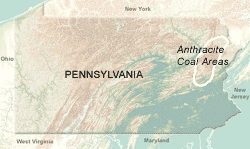 In the spring of 1902, the United Mine Workers called a strike among its membership in the anthracite coal fields of eastern Pennsylvania.¹ The public largely sided with the workers, who demanded safer working conditions, higher pay and recognition of their union. The strike dragged on through the summer and into the fall; business and schools were forced to close their doors because of a lack of coal for heating.
Anti-management sentiment peaked when word leaked out that George F. Baer, leader of the coal mine operators, had written to a W. F. Clark, a clergymen who had appealed for better treatment of the miners, that the miners had mistakenly put their trust in the union, identified as "labor agitators," rather than in Christian men, like himself, whom God had given control over the nation’s property interests. The newspapers gave this statement a thorough airing.
Roosevelt had no authority in the matter, but summoned representatives of both sides to a White House meeting. The president proposed arbitration; the miners accepted the proposal, but the owners declined. Then Roosevelt angrily threatened to send in federal soldiers to take over the mines. After issuing this threat, he turned to J.P. Morgan and secured his services to act as a go-between with the mine operators.
Thanks to Roosevelt’s active participation, a settlement was reached. The strike was ended in March 1903 and the miners received a wage increase. However, recognition of the union was not achieved.
Roosevelt described his actions as an attempt to secure a “square deal” for both sides. The term Square Deal would later be applied to his overall reform efforts.
In the spring of 1902, the United Mine Workers called a strike among its membership in the anthracite coal fields of eastern Pennsylvania.¹ The public largely sided with the workers, who demanded safer working conditions, higher pay and recognition of their union. The strike dragged on through the summer and into the fall; business and schools were forced to close their doors because of a lack of coal for heating.
Anti-management sentiment peaked when word leaked out that George F. Baer, leader of the coal mine operators, had written to a W. F. Clark, a clergymen who had appealed for better treatment of the miners, that the miners had mistakenly put their trust in the union, identified as "labor agitators," rather than in Christian men, like himself, whom God had given control over the nation’s property interests. The newspapers gave this statement a thorough airing.
Roosevelt had no authority in the matter, but summoned representatives of both sides to a White House meeting. The president proposed arbitration; the miners accepted the proposal, but the owners declined. Then Roosevelt angrily threatened to send in federal soldiers to take over the mines. After issuing this threat, he turned to J.P. Morgan and secured his services to act as a go-between with the mine operators.
Thanks to Roosevelt’s active participation, a settlement was reached. The strike was ended in March 1903 and the miners received a wage increase. However, recognition of the union was not achieved.
Roosevelt described his actions as an attempt to secure a “square deal” for both sides. The term Square Deal would later be applied to his overall reform efforts.