California, the Railroads, and the Gadsden Purchase
The Treaty of Guadalupe Hidalgo (1848), which concluded the Mexican War, was vague when describing the border between Mexico and the United States in the area west of the Rio Grande.
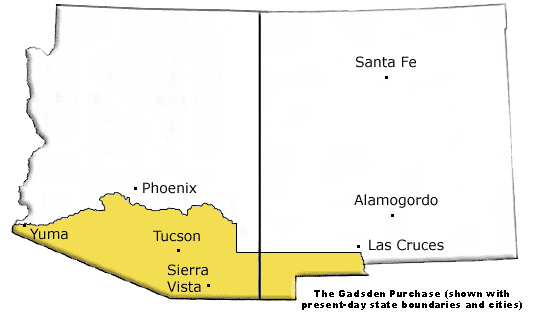
Establishing a clear boundary became more important as politicians and entrepreneurs began to investigate opportunities for building a transcontinental railroad. The eastern terminus of such a railroad was a matter of great debate and largely colored by sectional interests. Northerners tended to favor a route emanating from Chicago, then across Iowa and the Plains to the Rockies, the Sierras and finally to California. Southern interests naturally favored a route starting from their region with
Memphis and
New Orleans as possible points of origination. In truth, the Southern proposal offered the advantage of easier terrain, at least until the route met mountainous areas in southern
New Mexico.
The question of the railroad’s location quickly became embroiled in larger sectional concerns over slavery and expansion. President
Frankin Pierce, who was grieving over the recent loss of a son, turned frequently to advisors, especially to Secretary of War
Jefferson Davis. As a staunch supporter of the southern route, Davis dispatched James Gadsden, a railroad agent and promoter, to Mexico City in 1853. His instructions included authorization to secure by purchase the Mexican lands immediately south of the Gila River and, if possible, Lower California. Experiencing severe financial difficulties, Mexican President
Antonio López de Santa Anna accepted Gadsden’s former proposal, but not the latter.
This land sale, known as the Gadsden Purchase, gave the United States possession of the Mesilla Valley south of the Gila River, an area of nearly 30,000 square miles. In return the Mexicans received $10 million. The Senate conducted a ratification debate marked by much bitterness. Southern politicians badly wanted to approve the treaty and secure their railroad route. Northern interests objected to any more land that could become slave territory and did not want to give any support to the southern railroad idea. The treaty was eventually ratified by a very close vote in 1854.
