
Hernán Cortés (Cortez) had participated in the early waves of Spanish penetration into the New World and served for a number of years as a governing official in Cuba. Office duties aside, his greed became fueled by stories he heard about the fabulous wealth of the Aztecs in central Mexico. In 1519, Cortés prepared for conquest and pieced together a small army of 600 soldiers, plus assorted native allies; those human resources were supplemented by a limited supply of horses and cannon.
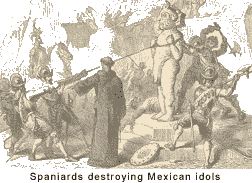 Landing on the Gulf coast of Mexico near what would soon become Veracruz, Cortés stiffened his soldiers' spines by burning his own fleet, which left the force no means of retreat. Progress toward the Aztec capital, Tenochtitlán, was painfully slow as armor-clad men trudged through sweltering jungle.
Initially, the Spaniards were welcomed. Native ruler Montezuma II believed that Cortés was the Aztec god-king Quetzalcoatl, so he regaled the newcomer with impressive gold and silver gifts. However, the invaders’ greed quickly led to a rupture. Cortés and his men had to fight their way out of the city in search of safety from the enraged populace; progress was slowed by the immense amount of gold, silver, and jewels that the retreating soldiers were carrying with them.
After regrouping, Cortés’s forces failed in an initial attack against Tenochtitlán, but a silent ally was at work — smallpox. The earlier contact between native and invader had introduced a new disease against which the Aztecs had no immunity. The toll was enormous. The second assault was successful and ushered in an exercise of brutal and unremitting suppression. Aztec control was eradicated by 1526.
In the years following the Aztecs' defeat, Spanish policy underwent changes. In later times, priests accompanied all colonial ventures for the purpose of spreading Roman Catholicism. In some instances the treatment of the natives improved, in others it did not.
The wealth extracted from the Viceroyalty of New Spain — the newly created administrative district encompassing Mexico and the Caribbean — helped to make Spain the richest and most powerful nation in the world. Additional fabulous riches were looted from the Inca Empire in the 1530s by Francisco Pizarro.
The Spanish material success in Mexico presented a sharp contrast to fruitless exploratory efforts conducted in the north.
Landing on the Gulf coast of Mexico near what would soon become Veracruz, Cortés stiffened his soldiers' spines by burning his own fleet, which left the force no means of retreat. Progress toward the Aztec capital, Tenochtitlán, was painfully slow as armor-clad men trudged through sweltering jungle.
Initially, the Spaniards were welcomed. Native ruler Montezuma II believed that Cortés was the Aztec god-king Quetzalcoatl, so he regaled the newcomer with impressive gold and silver gifts. However, the invaders’ greed quickly led to a rupture. Cortés and his men had to fight their way out of the city in search of safety from the enraged populace; progress was slowed by the immense amount of gold, silver, and jewels that the retreating soldiers were carrying with them.
After regrouping, Cortés’s forces failed in an initial attack against Tenochtitlán, but a silent ally was at work — smallpox. The earlier contact between native and invader had introduced a new disease against which the Aztecs had no immunity. The toll was enormous. The second assault was successful and ushered in an exercise of brutal and unremitting suppression. Aztec control was eradicated by 1526.
In the years following the Aztecs' defeat, Spanish policy underwent changes. In later times, priests accompanied all colonial ventures for the purpose of spreading Roman Catholicism. In some instances the treatment of the natives improved, in others it did not.
The wealth extracted from the Viceroyalty of New Spain — the newly created administrative district encompassing Mexico and the Caribbean — helped to make Spain the richest and most powerful nation in the world. Additional fabulous riches were looted from the Inca Empire in the 1530s by Francisco Pizarro.
The Spanish material success in Mexico presented a sharp contrast to fruitless exploratory efforts conducted in the north.