
Located near the small community of Andersonville in south central Georgia, Camp Sumter (as it was formally known) imprisoned nearly 50,000 Union enlisted men between early 1864 and the end of the war.
Early in the conflict the Union and Confederate authorities cooperated in prisoner exchanges. In 1863 the U.S. government halted that practice because of bad feeling and confusion about the Confederacy`s legal status.
The Confederacy began to expand its prison facilities. Initially most Union prisoners were kept in the Richmond, Virginia area, but the numbers grew so large, they presented a potential threat.
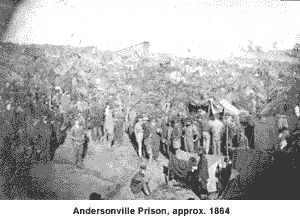 Georgia was chosen as the site of a new detainment facility for several reasons, including milder weather, easier access to food supplies and increased security. Originally intended to hold 10,000 prisoners, Andersonville exceeded its capacity. Conditions rapidly deteriorated. The stream crossing the camp became contaminated, leading to dysentery and death. Food was in short supply and poorly maintained. Exposure to the elements was a constant problem. By the end of the war, nearly 13,000 prisoners had died in the facility.
Ironically, many of the survivors of Andersonville were lost in the sinking of the Sultana on the Mississippi River in April 1865.
Major Henry Wirz, superintendent of Andersonville, was tried and convicted by a military tribunal. He was hanged in November 1865, the only Confederate official to meet that fate.
Georgia was chosen as the site of a new detainment facility for several reasons, including milder weather, easier access to food supplies and increased security. Originally intended to hold 10,000 prisoners, Andersonville exceeded its capacity. Conditions rapidly deteriorated. The stream crossing the camp became contaminated, leading to dysentery and death. Food was in short supply and poorly maintained. Exposure to the elements was a constant problem. By the end of the war, nearly 13,000 prisoners had died in the facility.
Ironically, many of the survivors of Andersonville were lost in the sinking of the Sultana on the Mississippi River in April 1865.
Major Henry Wirz, superintendent of Andersonville, was tried and convicted by a military tribunal. He was hanged in November 1865, the only Confederate official to meet that fate.