
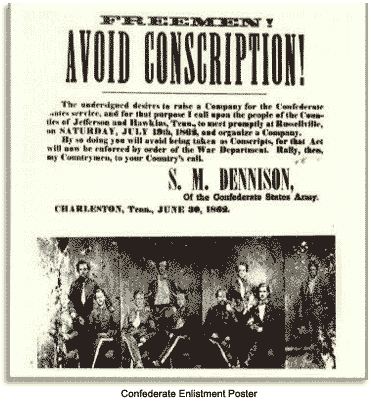
 The initial war fever soon dissipated in both the North and South, and each side was compelled to resort to conscription. The South instituted a draft in 1862, requiring three years of service for those selected between the ages of 18 and 35; later, as the war prospects dimmed, the pool was enlarged by taking in ages 17 to 50. A large number of exemptions were allowed and there were provisions for substitutions.
The threat of a draft was used in Missouri and Iowa to speed up the rate of volunteer enlistment. The Militia Act of 1862 gave the President authority to draft 300,000 militiamen for up to nine months. It was to be a state run affair, with each county to be involved in the selection. However, the threat of conscription was for the time being enough to keep enlistments at an adequate level.
The Draft Act of 1863 was the first instance of compulsory service in the federal military services. All male citizens, as well as aliens who had declared their intention of becoming citizens, between 20 and 45 were at risk of being drafted. No married man could be drafted until all the unmarried had been taken.
Two methods of evading the draft were available. A man could hire a substitute who would serve in his place, or he could simply pay $300 to get out of the obligation.
The lower classes resented this system; resistance and anger were especially fierce in the Northern cities, where large groups of immigrants lived. In July 1863, draft riots broke out in New York City and lasted four days. Some of the anger had been fueled by the Democratic Party, whose leaders doubted the wisdom of the war and hated Lincoln. News of heavy losses at Gettysburg ignited smoldering racism and led to a number of very unfortunate incidents. Freed blacks were unfairly targeted as the cause of the war and several were beaten to death or lynched by the mobs; a black orphanage and church were set on fire. The rage subsided only when the Army of the Potomac, supplemented by cadets from West Point, was deployed in New York.
Despite the resistance, the Civil War conscription policy established that it was within the powers of the federal government to compel enlistment without using the states to administer or approve.
The initial war fever soon dissipated in both the North and South, and each side was compelled to resort to conscription. The South instituted a draft in 1862, requiring three years of service for those selected between the ages of 18 and 35; later, as the war prospects dimmed, the pool was enlarged by taking in ages 17 to 50. A large number of exemptions were allowed and there were provisions for substitutions.
The threat of a draft was used in Missouri and Iowa to speed up the rate of volunteer enlistment. The Militia Act of 1862 gave the President authority to draft 300,000 militiamen for up to nine months. It was to be a state run affair, with each county to be involved in the selection. However, the threat of conscription was for the time being enough to keep enlistments at an adequate level.
The Draft Act of 1863 was the first instance of compulsory service in the federal military services. All male citizens, as well as aliens who had declared their intention of becoming citizens, between 20 and 45 were at risk of being drafted. No married man could be drafted until all the unmarried had been taken.
Two methods of evading the draft were available. A man could hire a substitute who would serve in his place, or he could simply pay $300 to get out of the obligation.
The lower classes resented this system; resistance and anger were especially fierce in the Northern cities, where large groups of immigrants lived. In July 1863, draft riots broke out in New York City and lasted four days. Some of the anger had been fueled by the Democratic Party, whose leaders doubted the wisdom of the war and hated Lincoln. News of heavy losses at Gettysburg ignited smoldering racism and led to a number of very unfortunate incidents. Freed blacks were unfairly targeted as the cause of the war and several were beaten to death or lynched by the mobs; a black orphanage and church were set on fire. The rage subsided only when the Army of the Potomac, supplemented by cadets from West Point, was deployed in New York.
Despite the resistance, the Civil War conscription policy established that it was within the powers of the federal government to compel enlistment without using the states to administer or approve.