
The United States uses the Saffir-Simpson Hurricane Scale developed in 1969. Categories are used to predict how much damage to structures is to be expected, how much flooding, and what the storm surge will be. Neither rainfall nor location is taken into account. These categories are:
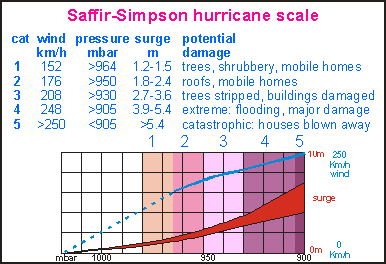
Sustained winds: 74–95 mph
Storm surge: 4–5 ft
Central pressure: 28.94 inHg; 980 mbars
Potential damage: No significant damage to building structures. Damage primarily to unanchored mobile homes, shrubbery, and trees. Also, some coastal flooding and minor pier damage.
Example storms: Hurricane Agnes (1972); Hurricane Danny (1997).
Category Two
Sustained winds: 96–110 mph
Storm surge: 6–8 ft
Central Pressure: 28.50–28.91 inHg; 965–979 mbars
Potential damage: Some roofing material, door, and window damage. Considerable damage to vegetation, mobile homes, etc. Flooding damages piers and small craft in unprotected moorings may break their moorings.
Example storms: Hurricane Bob (1991); Hurricane Bonnie (1998).
Category Three
Sustained winds: 111–130 mph
Storm surge: 9–12 ft
Central pressure: 27.91–28.47 inHg; 945–964 mbars
Potential damage: Some structural damage to small residences and utility buildings, with a minor amount of curtainwall failures. Mobile homes are destroyed. Flooding near the coast destroys smaller structures with larger structures damaged by floating debris. Terrain may be flooded well inland.
Example storms: Great New England Hurricane of 1938; Hurricane Fran (1996); Hurricane Rita (2005).
Category Four
Sustained winds: 131–155 mph
Storm surge: 13–18 ft
Central pressure: 27.17–27.88 inHg; 920–944 mbars
Potential damage: More extensive curtainwall failures with some complete roof structure failure on small residences. Major erosion of beach areas. Terrain may be flooded well inland.
Example storms: The Great Galveston Hurricane of 1900; Hurricane Charley (2004); Hurricane Hugo (1989).
Category Five
Sustained winds: 156+ mph
Storm surge: 19+ ft
Central pressure: less than 27.17 inHg; less than 920 mbars
Potential damage: Complete roof failure on many residences and industrial buildings. Some complete structural failures with small utility buildings blown over or away. Flooding causes major damage to lower floors of all structures near the shoreline. Massive evacuation of residential areas may be required.
Example storms: Hurricane Camille (1969); Labor Day Hurricane of 1935.