Andrew Johnson Reconstruction Plan
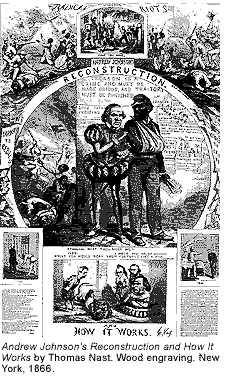 The looming showdown between Lincoln and the Congress over competing reconstruction plans never occurred. The president was assassinated on April 14, 1865. His successor, Andrew Johnson of Tennessee, lacked his predecessor’s skills in handling people; those skills would be badly missed. Johnson’s plan envisioned the following:
- Pardons would be granted to those taking a loyalty oath
- No pardons would be available to high Confederate officials and persons owning property valued in excess of $20,000
- A state needed to abolish slavery before being readmitted
- A state was required to repeal its secession ordinance before being readmitted.
Most of the seceded states began compliance with the president’s program. Congress was not in session, so there was no immediate objection from that quarter. However, Congress reconvened in December and refused to seat the Southern representatives.
Reconstruction had produced another deadlock between the president and Congress.
