
Soup kitchens in America started around 1929 when the effects of a growing depression began to be felt. The need for soup kitchens was felt even more keenly when the tailspin in the economy worsened in 1932, and 12 million Americans — about 25 percent of the normal labor force — were out of work. Governmental Unemployment Relief ranged from nonexistent to inadequate.
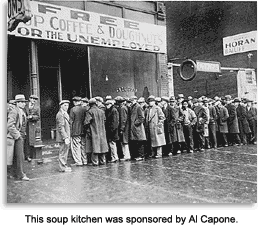 When soup kitchens first appeared, they were run by churches or private charities. The Capuchin Services Center in southeast Detroit, for example, served 1,500 to 3,000 people a day. That center opened on November 2, 1929. Volunteers of America also was important in setting up soup kitchens all over America.
By the mid-1930s, state and federal governments also were operating them.
Soup kitchens served mostly soup and bread. Soup was economical because water could be added to serve more people, if necessary.
At the outset of the Depression, Al Capone, the notorious gangster from Chicago, established the first soup kitchen. He started it because he wanted to clean up his shady image. Capone`s kitchen served three meals a day to ensure that everyone who had lost a job could get a meal.
Every city and town had a soup kitchen. If a hungry person happened to be out in the country, he or she would have to travel to a nearby community to get a meal. Kitchens would either be run outdoors, in churches, cafeterias, or service centers.
Soup kitchens still exist for homeless persons and struggling families across America. Some organizations that had started with kitchens expanded their services. For example, Volunteers of America is now involved with children`s daycare as well as family, elder, housing, correctional and emergency services.