
Like their counterparts in the northern plains, southern Plains Indians fought against being relegated to reservations. The nations involved included the Arapaho, Comanche, the Kiowa under Satanta and the Cheyenne under Black Kettle.
 The Fort Laramie Treaty of 1851 assured all of eastern Colorado and western Kansas to the Cheyenne. Within that decade, however, the 1859 Pikes Peak gold rush attracted whites across Cheyenne land. The treaty was effectively ignored.
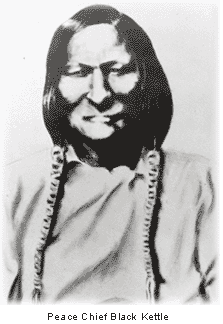
Black Kettle was the moderate leader of the southern Cheyenne in Colorado, noted for consistently seeking peace with the whites. Rather than turn back the white influx, the government induced the Southern Cheyenne to sign yet another treaty. Anticipating U.S. retaliation if he didn’t pen the accord, Black Kettle agreed to surrender all his people's lands in 1861 except for the barren and forsaken Sand Creek Reservation in southeastern Colorado.
Diseases crept through Cheyenne dwellings on the reservation like silent killers. Hunters had to go wide afield to locate the buffalo herds. Farmers watched their crops wither and starvation set in. Many Cheyenne, in particular the young braves, chose to go off the reservation to steal livestock, pillage the possessions of settled whites and attack transiting wagon trains.
One such bloody foray, in the spring of 1864, provoked white Coloradoans over the edge. They gave orders to their militia to regard any Cheyenne crossing their path as fair game. This eventually led to a dreadful incident on November 29. One John Chivington commanded his Third Colorado Volunteers in a daybreak assault on a clump of dwellings occupied by Black Kettle and his band. Cheyenne men, women and children, numbering around 200, were annihilated, with numerous bodies grossly disfigured. The attack's pointless ferocity horrified the country.
Despite the madness of Chivington's militia, Black Kettle pressed on with his peace efforts and signed the Treaty of the Little Arkansas (1865). Predictably, the government neglected the treaty's pledges, but Black Kettle attempted again to negotiate, signing the Medicine Lodge Treaty of 1867.
General George A. Custer delivered the coup de grace. On November 27, 1868, Custer and his Seventh Cavalry attacked Black Kettle’s camp on the Washita River without warning and killed the chief, his wife and hundreds of his people as well as numerous Cheyenne ponies.
Indian forays on frontier settlements in Colorado, Kansas, New Mexico and Texas came to a head in the Red River War of 1874-1875. General William T. Sherman launched a campaign against the natives, who capitulated after more than 14 confrontations.
The Fort Laramie Treaty of 1851 assured all of eastern Colorado and western Kansas to the Cheyenne. Within that decade, however, the 1859 Pikes Peak gold rush attracted whites across Cheyenne land. The treaty was effectively ignored.
Black Kettle was the moderate leader of the southern Cheyenne in Colorado, noted for consistently seeking peace with the whites. Rather than turn back the white influx, the government induced the Southern Cheyenne to sign yet another treaty. Anticipating U.S. retaliation if he didn’t pen the accord, Black Kettle agreed to surrender all his people's lands in 1861 except for the barren and forsaken Sand Creek Reservation in southeastern Colorado.
Diseases crept through Cheyenne dwellings on the reservation like silent killers. Hunters had to go wide afield to locate the buffalo herds. Farmers watched their crops wither and starvation set in. Many Cheyenne, in particular the young braves, chose to go off the reservation to steal livestock, pillage the possessions of settled whites and attack transiting wagon trains.
One such bloody foray, in the spring of 1864, provoked white Coloradoans over the edge. They gave orders to their militia to regard any Cheyenne crossing their path as fair game. This eventually led to a dreadful incident on November 29. One John Chivington commanded his Third Colorado Volunteers in a daybreak assault on a clump of dwellings occupied by Black Kettle and his band. Cheyenne men, women and children, numbering around 200, were annihilated, with numerous bodies grossly disfigured. The attack's pointless ferocity horrified the country.
Despite the madness of Chivington's militia, Black Kettle pressed on with his peace efforts and signed the Treaty of the Little Arkansas (1865). Predictably, the government neglected the treaty's pledges, but Black Kettle attempted again to negotiate, signing the Medicine Lodge Treaty of 1867.
General George A. Custer delivered the coup de grace. On November 27, 1868, Custer and his Seventh Cavalry attacked Black Kettle’s camp on the Washita River without warning and killed the chief, his wife and hundreds of his people as well as numerous Cheyenne ponies.
Indian forays on frontier settlements in Colorado, Kansas, New Mexico and Texas came to a head in the Red River War of 1874-1875. General William T. Sherman launched a campaign against the natives, who capitulated after more than 14 confrontations.