
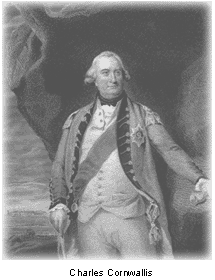
Charles Cornwallis was born in London and educated at Eton and Cambridge. His first military experience came in the Seven Years’ War when he was commissioned as an ensign in the British army and served in Germany. In 1760, Cornwallis was elected to the House of Commons; two years later he inherited his father’s earldom and entered the House of Lords as Earl Cornwallis.
 During the 1760s and early 1770s, Cornwallis regularly spoke out against the repressive tax policies that Britain was imposing on its American colonies. However, his sympathy did not extend to support for independence and he joined British forces in America in August 1776.
Cornwallis saw action in most of the major campaigns of the War of Independence. He served with William Howe on Long Island in the late summer of 1776, then assisted in the pursuit of George Washington across New Jersey. He also was present at the American victories at Trenton and Princeton, and in September 1777 the British triumph at Brandywine. Cornwallis was impatient with Howe’s lack of initiative and was later similarly critical of Sir Henry Clinton. In frustration, Cornwallis resigned his commission, but his resignation was not accepted.
In 1778, Cornwallis was named second in command under Clinton and in 1780 assisted in the opening of a renewed effort in the American South. He won an important victory at Camden over Horatio Gates in June 1780, but was forced to retreat after Guilford Court House in March 1781. His army marched north through North Carolina and into Virginia, where the forces of Washington and the French fleet compelled his surrender at Yorktown in October 1781.
The defeat at Yorktown did not destroy Cornwallis’s career, however. In 1786, he was appointed governor-general of India, where he brought important reforms to the civil service and the judiciary. He also instituted a major land reform and led military campaigns against native uprisings. In 1792, he was made a marquess for his service in India.
In 1798, Cornwallis became viceroy and commander-in-chief in Ireland. He won some measure of respect from both Roman Catholics and Protestants for his sincerity and dedication. Other contributions included quelling a rebellion in 1798 and thwarting a French invasion. He supported the Act of Union in 1801, which joined the British and Irish in Parliament, but resigned when the king failed to guarantee political rights for Catholics.
Cornwallis served as minister plenipotentiary during the negotiation of the Treaty of Amiens (1802), which brought a cessation in the Napoleonic Wars.
In 1805, Cornwallis returned as governor-general in India, but died shortly after his arrival.
Lord Cornwallis is commonly remembered in American history for his failure at Yorktown, but that single event shortchanges the contributions made by what many authorities regard as the most capable British commander in the war. His most important contributions to the British Empire came in the years after 1781.
During the 1760s and early 1770s, Cornwallis regularly spoke out against the repressive tax policies that Britain was imposing on its American colonies. However, his sympathy did not extend to support for independence and he joined British forces in America in August 1776.
Cornwallis saw action in most of the major campaigns of the War of Independence. He served with William Howe on Long Island in the late summer of 1776, then assisted in the pursuit of George Washington across New Jersey. He also was present at the American victories at Trenton and Princeton, and in September 1777 the British triumph at Brandywine. Cornwallis was impatient with Howe’s lack of initiative and was later similarly critical of Sir Henry Clinton. In frustration, Cornwallis resigned his commission, but his resignation was not accepted.
In 1778, Cornwallis was named second in command under Clinton and in 1780 assisted in the opening of a renewed effort in the American South. He won an important victory at Camden over Horatio Gates in June 1780, but was forced to retreat after Guilford Court House in March 1781. His army marched north through North Carolina and into Virginia, where the forces of Washington and the French fleet compelled his surrender at Yorktown in October 1781.
The defeat at Yorktown did not destroy Cornwallis’s career, however. In 1786, he was appointed governor-general of India, where he brought important reforms to the civil service and the judiciary. He also instituted a major land reform and led military campaigns against native uprisings. In 1792, he was made a marquess for his service in India.
In 1798, Cornwallis became viceroy and commander-in-chief in Ireland. He won some measure of respect from both Roman Catholics and Protestants for his sincerity and dedication. Other contributions included quelling a rebellion in 1798 and thwarting a French invasion. He supported the Act of Union in 1801, which joined the British and Irish in Parliament, but resigned when the king failed to guarantee political rights for Catholics.
Cornwallis served as minister plenipotentiary during the negotiation of the Treaty of Amiens (1802), which brought a cessation in the Napoleonic Wars.
In 1805, Cornwallis returned as governor-general in India, but died shortly after his arrival.
Lord Cornwallis is commonly remembered in American history for his failure at Yorktown, but that single event shortchanges the contributions made by what many authorities regard as the most capable British commander in the war. His most important contributions to the British Empire came in the years after 1781.