Blue Laws
Puritan church members in the Massachusetts Bay colony, and later, Congregationalists elsewhere in New England, believed that their contractual relationship with God required them to enforce proper behavior in their communities. This perceived requirement resulted in the enactment of a variety of laws designed to regulate the conduct of all members of society.
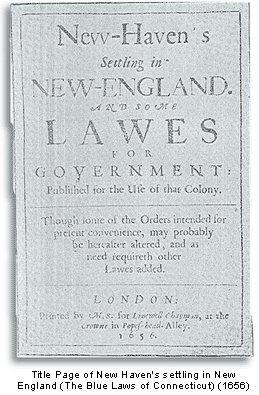 In its strictest sense, “blue law”* refers to an edict designed to regulate public activities on the Sabbath, which meant Sunday to the Congregationalists of that day. In common parlance, the term blue law was expanded to include several different areas of behavior:
- Sabbath Regulations. The first laws regulating public activities on Sundays were passed in colonial Virginia in the 1620s. Similar laws intended to keep the Sabbath holy were soon adopted elsewhere in America. Typically, all forms of trade or commerce were outlawed. No public entertainment or meetings were permitted, except of course for church services, which often included two-hour services in the morning and the afternoon. Travel on Sunday was banned, except for emergencies. Violators were subject to fines imposed by civil authorities.
- Family Relationships. Efforts were made in many communities to provide social stability through legislation. Husbands and wives were required to live together to keep families intact. Parents risked losing their children if it were found that they were being poorly educated. The Puritans placed a heavy emphasis on the ability to read and understand the Bible, so great effort was expended to educate the community.
- Sumptuary Laws. Many New England towns passed laws intended to prevent excesses in the areas of clothing and food consumption. Motivations in these instances were somewhat mixed. Part of the explanation can be found in the desire to prevent excessive human behavior. However, there was also an element of trying to keep people in their proper social stations. Fines were imposed on people on the lower rungs of society who dressed in silk or wore silver buckles on their shoes — perfectly acceptable practices for the upper classes.
- Public Behavior. Community members found guilty of drunkenness, idleness or gossiping were made the targets of public ridicule during their confinement in the stocks or pillory. No celebrations of Christmas, other holidays or church weddings were permitted since those events were not sanctioned in the Bible. Public displays of affection between the sexes, even between husband and wife, were prohibited.
By the time of the American Revolution, many of the personal conduct laws were no longer enforced. Some, however, have remained on the books to the present day.
The blue laws also underwent a revival of sorts in the late 19th and early 20th centuries in the nationwide
Prohibition movement. Many communities also enacted Sunday closing laws, which prohibited businesses from operating on the Sabbath; other areas contented themselves with outlawing the sale of tobacco and liquor on Sundays.
*The origin of the term blue law is disputed. A number of authorities have argued that some of the early laws, or a book describing the regulations, were printed on blue paper. Others suggest that the name is associated with “blue blood,” a term conveying a disapproving view of common behavior.
