
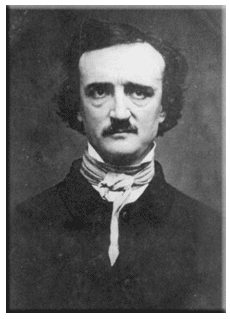
Edgar Allan Poe was an American poet, short-story writer, editor and critic. He is best known for his tales of the macabre, and poems. He also was one of the early writers of the short story, detective fiction, and crime fiction in the United States. Considerable mystery surrounds his death, and even his exact burial location.
 The early years
Edgar Allan Poe was born on January 19, 1809, in Boston, Massachusetts. He was the son of actors David Poe Jr. and Eliza Poe. He had a brother and sister. Before Edgar was three years old, he and his siblings were orphaned. They were taken to live with John and Fanny Allan in Richmond, Virginia. In 1815, they moved to England, where Edgar attended school. The family moved back to the U.S. in 1820.
In 1826, Edgar enrolled at the University of Virginia. He was a good student, but he started to gamble to earn more money. He and his foster father had a falling out. After only one year at the university, Edgar enlisted in the U.S. Army in 1827, under the assumed name of Edgar A. Perry. That year, he published his first book, Tamerlane and Other Poems. After serving for two years and attaining the rank of sergeant major, Poe was discharged.
In 1829, Poe published his second book, Al Aaraf. At the request of his dying foster mother, Poe reconciled with his foster father, who helped him to obtain an appointment to West Point. However, Poe was dismissed for disobeying orders. That led to his and John Allan's estrangement until the latter's death in 1834.
Editing, marrying — and drinking
Poe moved to Baltimore, Maryland, with his widowed aunt, Maria Clemm, and her daughter, his first cousin, Virginia Eliza. He continued to write fiction to support himself, and in 1835, became an editor for the Southern Literary Messenger, in Richmond, Virginia.
In 1836, he married Virginia — who was 13 years old.
Poe's work at the Messenger increased its circulation, but his drinking habits provoked his dismissal from the magazine. In 1839, Poe became an assistant editor of Burton's Gentleman's Magazine. During the same year, the collection Tales of the Grotesque and Arabesque was published in two volumes. It was not a financial success, but proved to be a milestone in the history of American literature, featuring such eerie, classic Poe tales as “The Fall of the House of Usher," "MS. Found in a Bottle," and "Berenice." Poe stayed with Burton’s for a year, then took a position as an assistant editor at Graham’s Magazine.
Illness strikes his wife
Virginia contracted tuberculosis in 1842, rendering her into an invalid and eventually taking her life. Under the stress of her illness, Edgar drank more heavily. He left Graham's and moved to New York. He worked for a short time with the Evening Mirror before becoming the editor of the Broadway Journal.
On January 29, 1845, Poe's haunting poem, The Raven, appeared in the Evening Mirror, and became a popular sensation. After the Broadway folded in 1846, he moved to a cottage in Bronx, New York. Nearby Fordham University's bell tower inspired him to write The Bells.
Virginia died in 1847. Edgar became increasingly unstable following his wife's death. He attempted to court the poet Sarah Helen Whitman, but their relationship did not last. Edgar returned to Richmond, Virginia.
A mysterious end
The circumstances of Poe's death remain a mystery. Following a visit to Norfolk and Richmond to give lectures, he was found in Baltimore in a pitiable condition and taken unconscious to Washington College Hospital, where he died early on the morning of October 7, 1849. Poe was never coherent long enough to tell anyone what had happened to him — and why he was wearing clothes that were not his. His remains were purportedly buried in the yard of Westminster Presbyterian Church in Baltimore, Maryland.
Edgar Allan Poe, his wife Virginia, and his mother-in-law Maria, lived in several homes in Philadelphia, Pennsylvania, but only the last house there has survived. The Spring Garden house, where the author lived in 1843-44, is today preserved by the National Park Service as the Edgar Allan Poe National Historic Site. The Poe Cottage in the Bronx is located on the southeast corner of the Grand Concourse and Kingsbridge Road. It is open to the public.
The early years
Edgar Allan Poe was born on January 19, 1809, in Boston, Massachusetts. He was the son of actors David Poe Jr. and Eliza Poe. He had a brother and sister. Before Edgar was three years old, he and his siblings were orphaned. They were taken to live with John and Fanny Allan in Richmond, Virginia. In 1815, they moved to England, where Edgar attended school. The family moved back to the U.S. in 1820.
In 1826, Edgar enrolled at the University of Virginia. He was a good student, but he started to gamble to earn more money. He and his foster father had a falling out. After only one year at the university, Edgar enlisted in the U.S. Army in 1827, under the assumed name of Edgar A. Perry. That year, he published his first book, Tamerlane and Other Poems. After serving for two years and attaining the rank of sergeant major, Poe was discharged.
In 1829, Poe published his second book, Al Aaraf. At the request of his dying foster mother, Poe reconciled with his foster father, who helped him to obtain an appointment to West Point. However, Poe was dismissed for disobeying orders. That led to his and John Allan's estrangement until the latter's death in 1834.
Editing, marrying — and drinking
Poe moved to Baltimore, Maryland, with his widowed aunt, Maria Clemm, and her daughter, his first cousin, Virginia Eliza. He continued to write fiction to support himself, and in 1835, became an editor for the Southern Literary Messenger, in Richmond, Virginia.
In 1836, he married Virginia — who was 13 years old.
Poe's work at the Messenger increased its circulation, but his drinking habits provoked his dismissal from the magazine. In 1839, Poe became an assistant editor of Burton's Gentleman's Magazine. During the same year, the collection Tales of the Grotesque and Arabesque was published in two volumes. It was not a financial success, but proved to be a milestone in the history of American literature, featuring such eerie, classic Poe tales as “The Fall of the House of Usher," "MS. Found in a Bottle," and "Berenice." Poe stayed with Burton’s for a year, then took a position as an assistant editor at Graham’s Magazine.
Illness strikes his wife
Virginia contracted tuberculosis in 1842, rendering her into an invalid and eventually taking her life. Under the stress of her illness, Edgar drank more heavily. He left Graham's and moved to New York. He worked for a short time with the Evening Mirror before becoming the editor of the Broadway Journal.
On January 29, 1845, Poe's haunting poem, The Raven, appeared in the Evening Mirror, and became a popular sensation. After the Broadway folded in 1846, he moved to a cottage in Bronx, New York. Nearby Fordham University's bell tower inspired him to write The Bells.
Virginia died in 1847. Edgar became increasingly unstable following his wife's death. He attempted to court the poet Sarah Helen Whitman, but their relationship did not last. Edgar returned to Richmond, Virginia.
A mysterious end
The circumstances of Poe's death remain a mystery. Following a visit to Norfolk and Richmond to give lectures, he was found in Baltimore in a pitiable condition and taken unconscious to Washington College Hospital, where he died early on the morning of October 7, 1849. Poe was never coherent long enough to tell anyone what had happened to him — and why he was wearing clothes that were not his. His remains were purportedly buried in the yard of Westminster Presbyterian Church in Baltimore, Maryland.
Edgar Allan Poe, his wife Virginia, and his mother-in-law Maria, lived in several homes in Philadelphia, Pennsylvania, but only the last house there has survived. The Spring Garden house, where the author lived in 1843-44, is today preserved by the National Park Service as the Edgar Allan Poe National Historic Site. The Poe Cottage in the Bronx is located on the southeast corner of the Grand Concourse and Kingsbridge Road. It is open to the public.